

About us
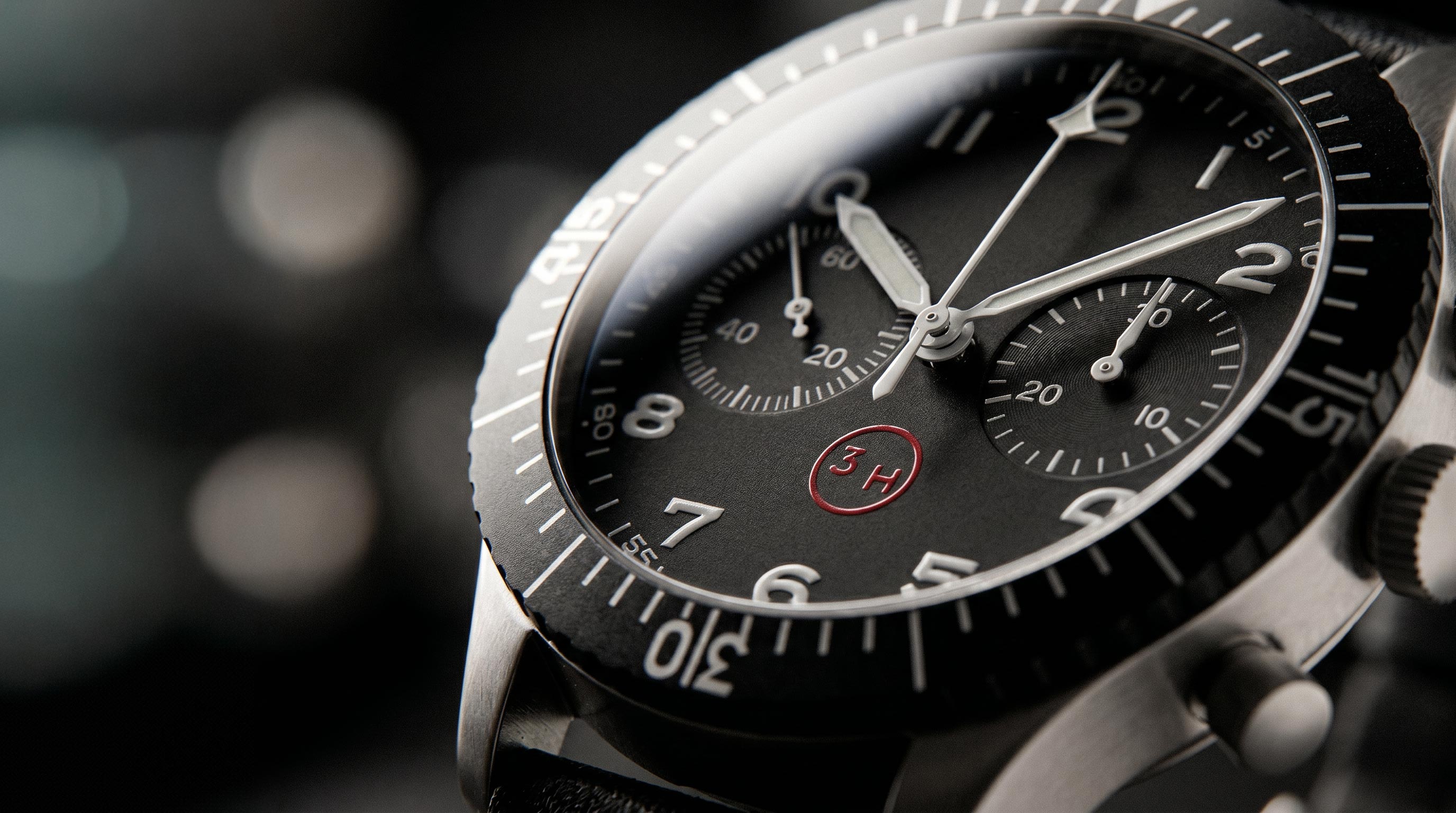
A legacy reborn
Swiss precision and German craftsmanship
For more than one hundred years, the Aeschbach name has represented a unique blend of Swiss precision and German craftsmanship.
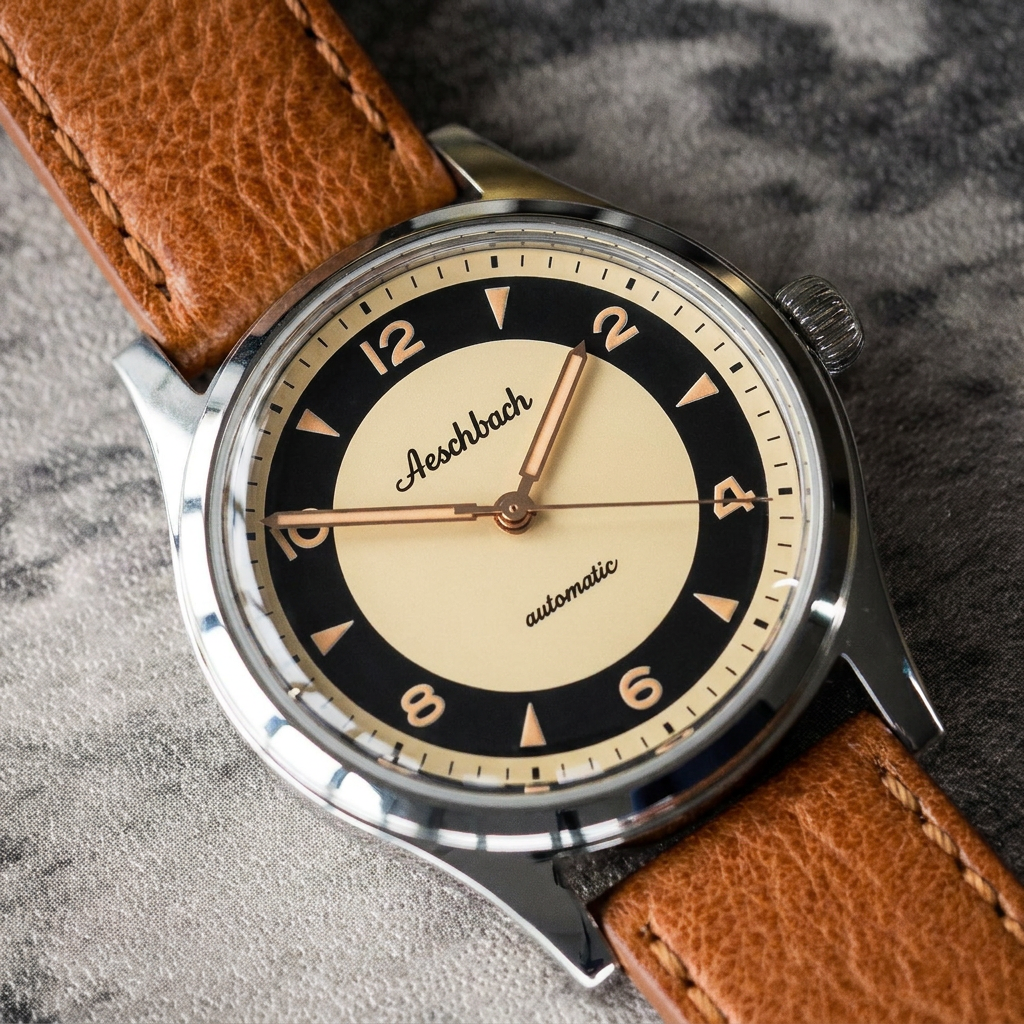
The Origins of Jakob Aeschbach
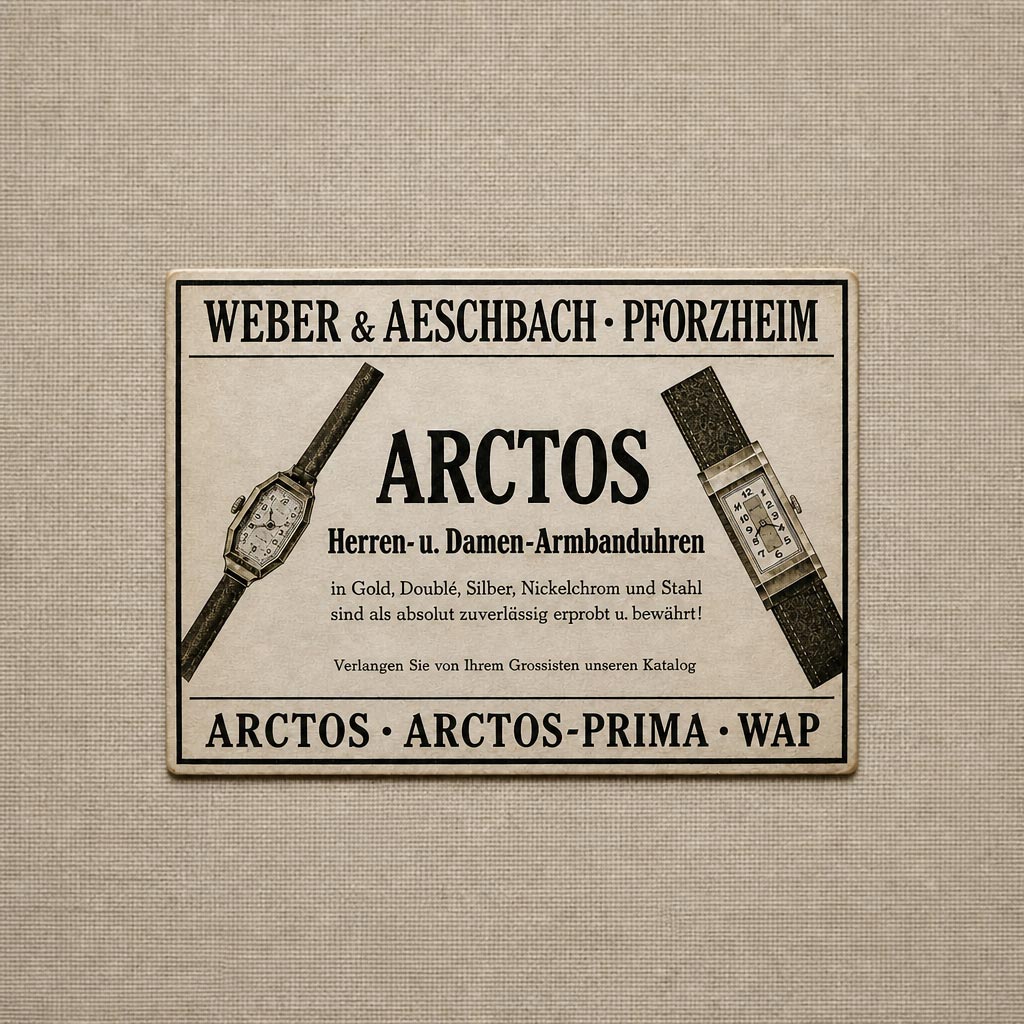
Jakob Aeschbach was born in Switzerland in 1896 and trained as a watchmaker during his early years. His technical expertise eventually brought him to post-First World War Germany, where he partnered with German merchant Philipp Weber, WEBER & AESCHBACH was founded on April 1, 1923 in Pforzheim— a city internationally renowned for jewellery and precision manufacturing.
Together, they created the ARCTOS brand, named after the Great Bear constellation. The partnership proved highly successful, with Aeschbach focusing on technical development and production while Weber concentrated on commercial expansion and distribution
Growth and Innovation
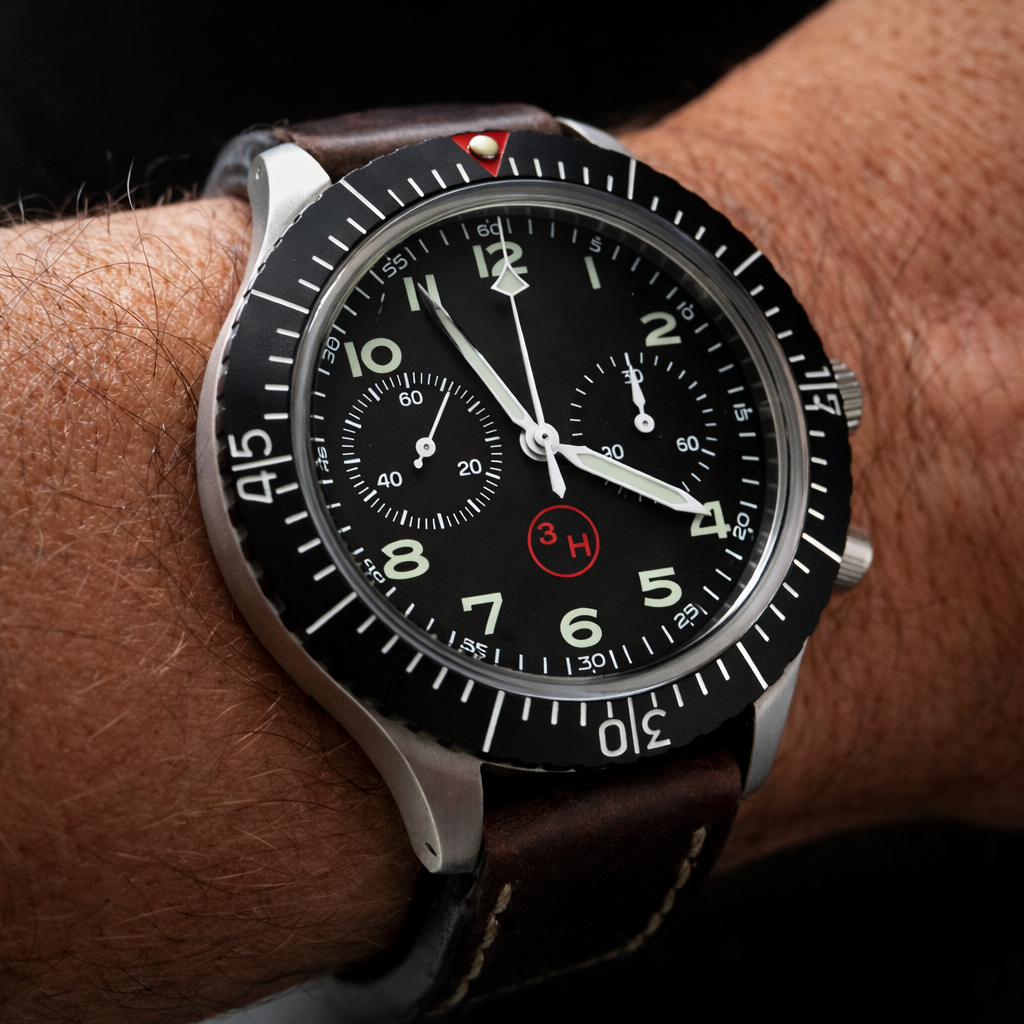
Despite the severe economic turbulence of post-war Germany and the hyperinflation crisis of the 1920s, WEBER & AESCHBACH expanded rapidly.
The company introduced watchmaking training programmes in Pforzheim, significantly increased production capacity, and became one of the first local firms to import Swiss movements for German assembly.
By the 1930s, WEBER & AESCHBACH had established itself as a major manufacturer, producing watches both under the ARCTOS name and for a variety of commercial clients.
In 1931, the company launched the Pforzheim Collection, aimed primarily at German wholesalers. By the early 1940s, the business employed approximately 900 people across eight workshops and had acquired interests in movement manufacturing operations associated with UROFA and Glashütte production. The company was located at Museumstraße 6 in Pforzheim, no remains of this building still exist today.
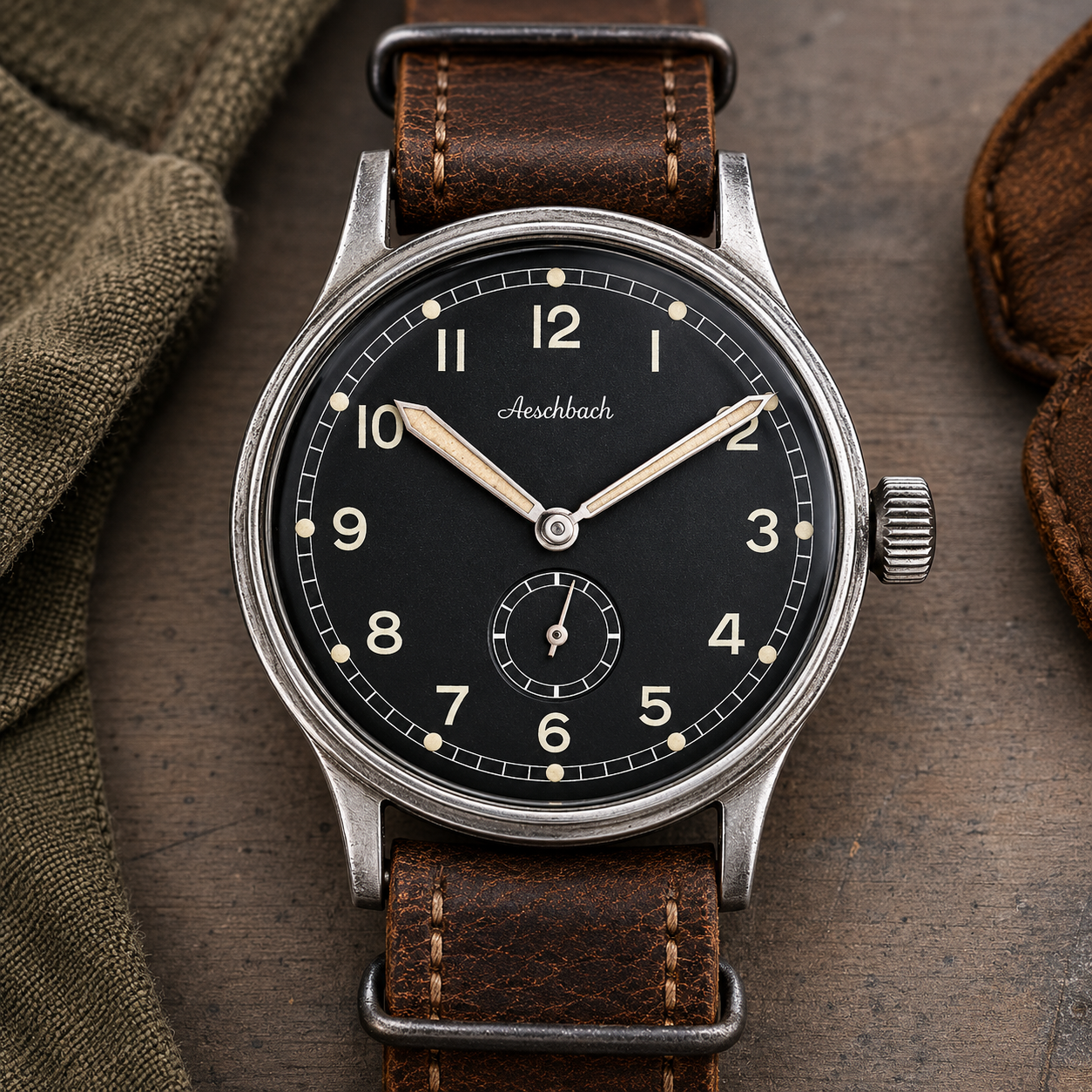
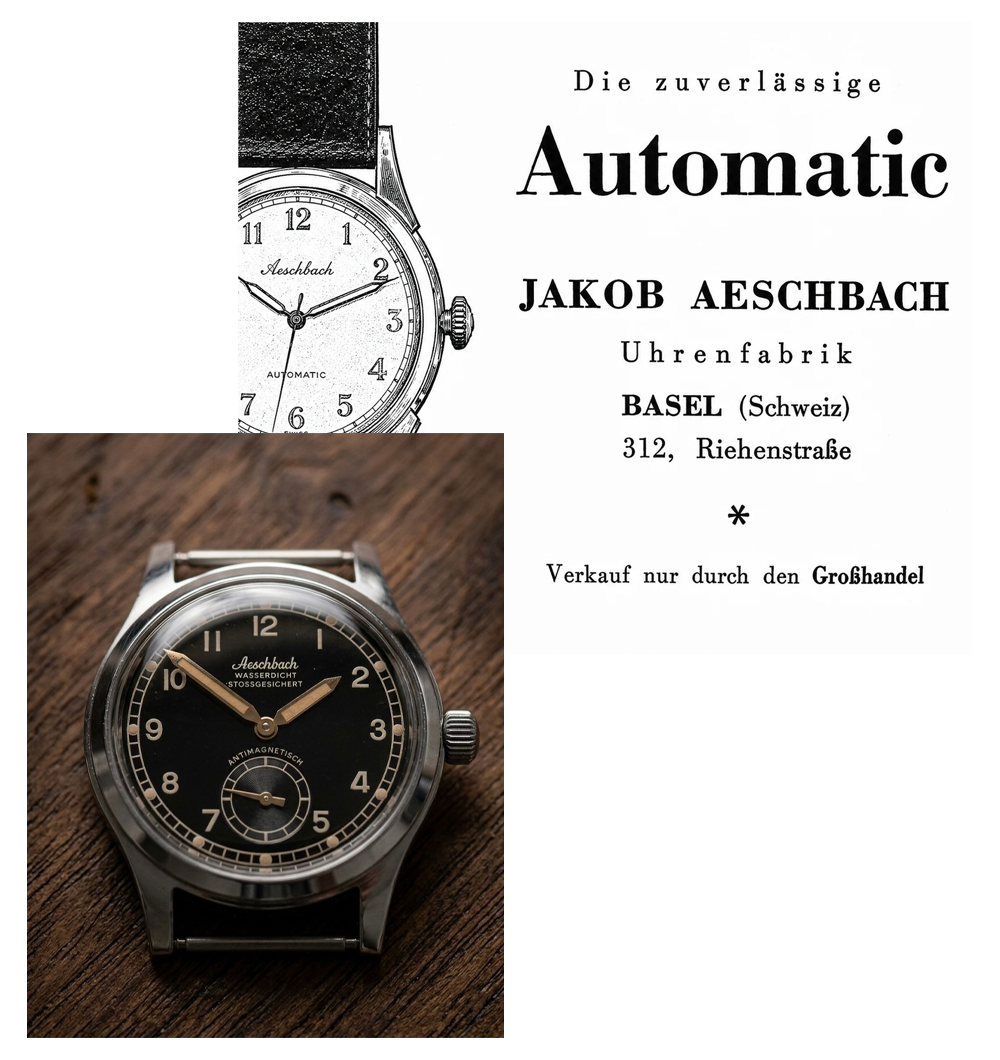
During the Second World War, the company produced a substantial number of watches for both the German Luftwaffe (Air Force) and the Wehrmacht (Army). Shown below is a sympathetically restored example dating from 1942, carefully preserved to retain the character and patina of the original wartime timepiece.
War, Exile and Survival
As political conditions deteriorated during the 1930s, Aeschbach’s position in Germany became increasingly difficult. The changing political climate and racial legislation of the period forced major upheaval within many businesses and industries across Germany.
Aeschbach eventually returned to Switzerland, where he continued operating independently under his own name.
During this period, he continued developing new watch concepts and designs, including the aviation project that would later inspire the modern Aeschbach RLM collection.
Tragedy and Resilience
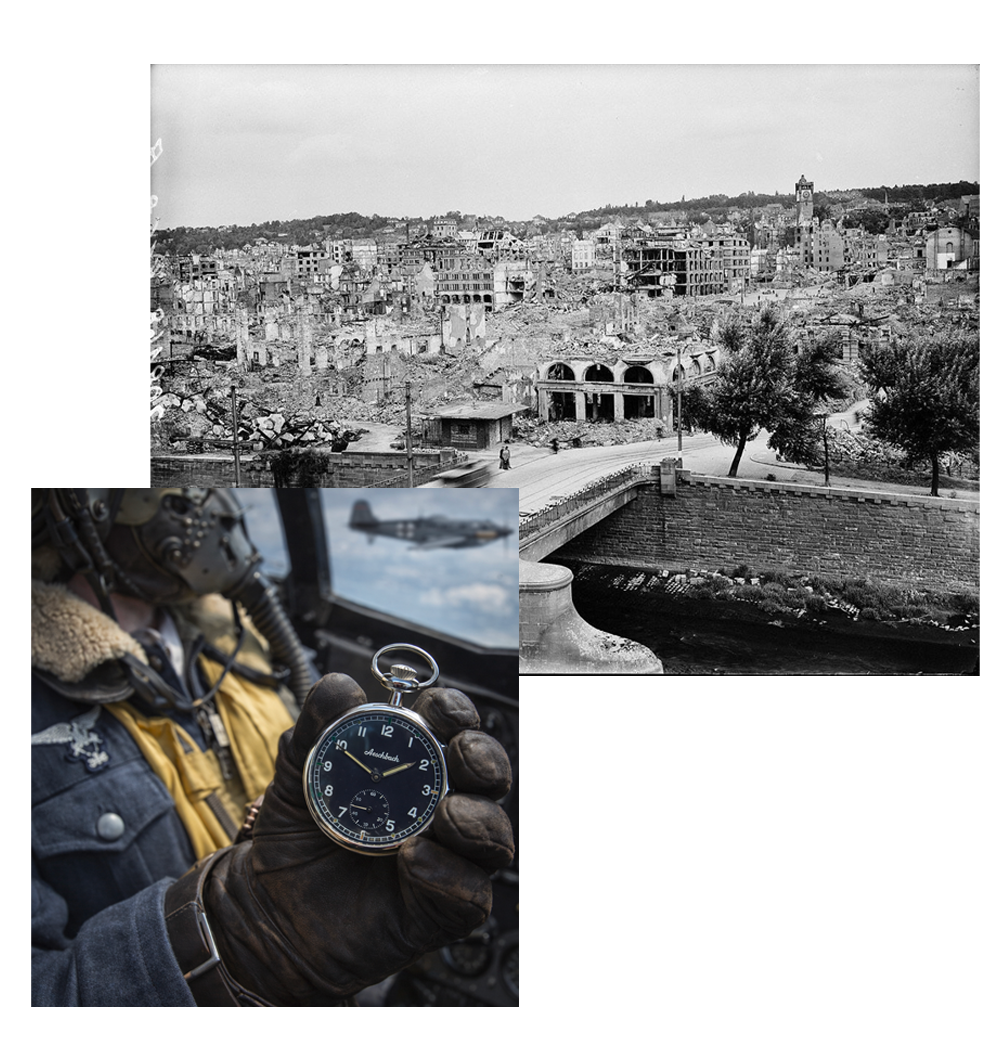
The Second World War brought catastrophic destruction to Pforzheim.
On 23 February 1945, the city was subjected to one of the most devastating bombing raids of the war. In approximately twenty-two minutes, around 83% of the city was destroyed and an estimated 17,600 people lost their lives — more than thirty percent of the population at that time.
The industrial heart of Pforzheim was left in ruins, and with it much of the WEBER & AESCHBACH operation disappeared.
The Revival of Aeschbach
Following the war, Jakob Aeschbach returned to Germany and resumed watch production activities in collaboration with German industry partners.
He later retired to Pforzheim in 1957 and passed away in 1961, leaving behind a remarkable but largely forgotten chapter in European watchmaking history.
Today, the Aeschbach name has been revived by a new generation determined to preserve and continue that legacy.
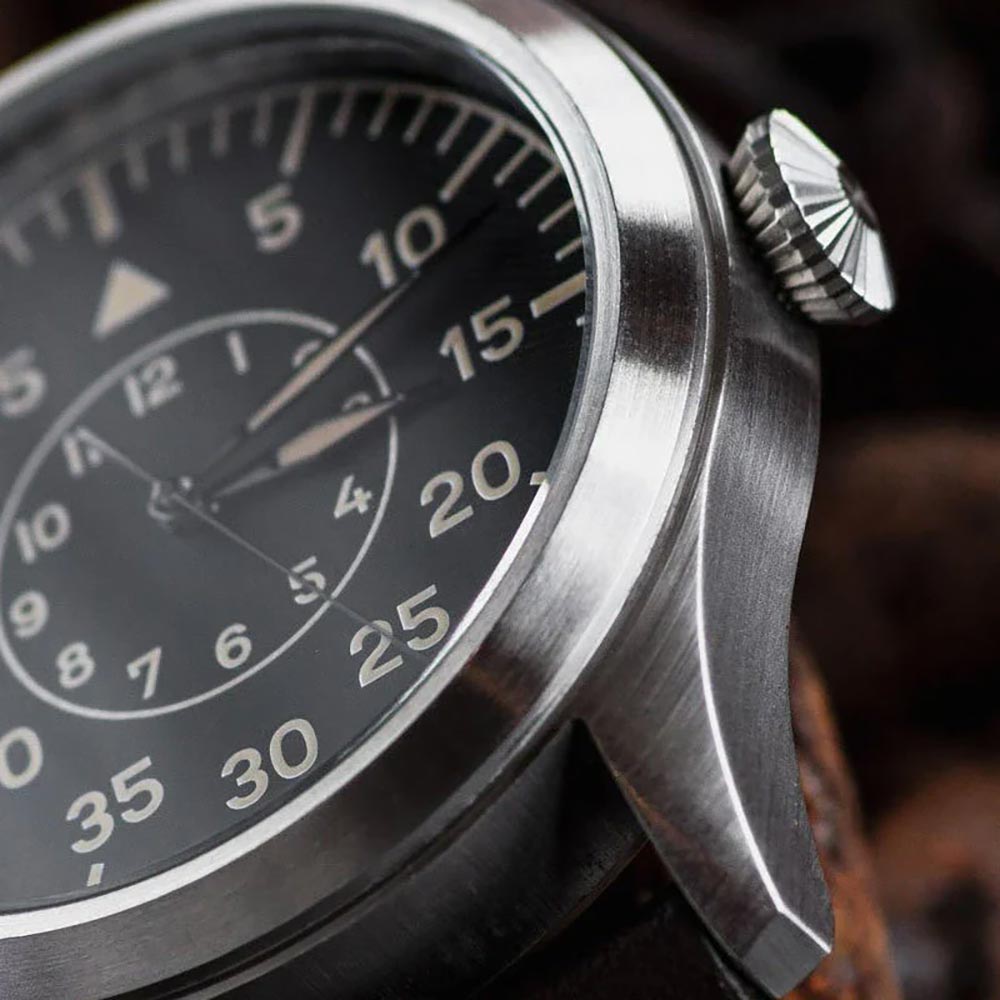
Drawing inspiration from original historic designs while utilising modern materials and production methods, the current collection represents a bridge between past and present — respecting tradition while embracing innovation.
A Legacy Among Legends
During the 1930s and 1940s, military and aviation authorities sourced watches from a wide range of European manufacturers, including names such as Breitling, IWC, Longines, Omega, and Zenith.
Aeschbach belongs to this broader tradition of functional European watchmaking — where engineering, legibility, and reliability mattered above all else.
Jakob Aeschbach’s journey from Switzerland to Germany and back again, through war, destruction, and rebuilding, reflects not only the resilience of one man, but also the enduring appeal of craftsmanship and mechanical ingenuity.
Today, the Aeschbach name returns as a tribute to that history — carried forward for a new generation of enthusiasts who appreciate timeless design, heritage, and authenticity.